Rescue Diver Certification in North Florida
Learn to spot trouble before it becomes an emergency, manage a diver in distress, and stop being the person on the boat who is
hoping somebody else knows what to do.
- Calm Under Pressure
- Trained Response
- Veteran Owned
Taught by a Ph.D. educator, Navy veteran, and IDEA Course Director.
Your first certification · From $450 · Private pace
You Would Not Know What to Do, and You Know It
You have thought about it. A buddy who stops responding, a panicked diver on the surface, someone who does not come up when they should. You have run the scene in your head and it ends with you shouting for help.
Diving with people you care about makes that worse, not better. Your family and your friends assume that if something goes wrong, somebody nearby is competent. Right now that assumption is doing a lot of work.
Being in the water with people you love should feel
prepared, deliberate, and steady, not quietly dependent on nothing going wrong.
I'm Wade Howell, and I'm Here to Make You the Prepared One
Every diver who has done this course says the same thing afterward: they see the water differently now. Not fearfully. They notice the person breathing too fast on the surface, the buddy drifting, the gear that is wrong in a way nobody else has spotted yet.
I served as a Navy hospital corpsman before I ever taught a dive course, which means responsibility for someone else's life was the job long before it was a curriculum. I hold a Ph.D., have taught for over twenty years, and am an IDEA Course Director. This course gets taught
slowly, physically, and without shortcuts.
Nobody plans an emergency. Be ready anyway.
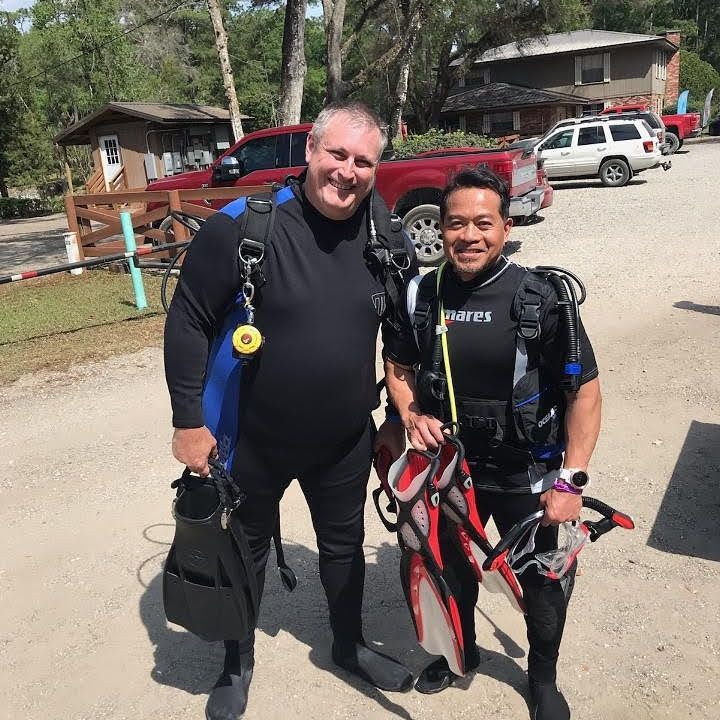
DEVIL'S DEN · WILLISTON, FL
What divers say
Your pace / Spring dives / From $450
Flagship
Scheduled / 20 dives logged / From $1,300
A Course That Changes How You Watch the Water
Problems Spotted Early
Trained recognition of stress and distress so you can intervene while a situation is still small, which means most incidents end before they ever become rescues.
A Response You Have Rehearsed
Physical drills repeated until they are reflex so you can act without deliberating, which means panic meets a plan instead of an audience.
Better Diving for Everyone Near You
Awareness that extends past your own gauges so you can dive as a genuine buddy, which means the people around you are safer for your being there.
How It Works
Build the Knowledge
Academics cover stress recognition, accident management, and dive-site emergency planning so you can understand the scene before you enter it.
Drill the Skills
Surface tows, unresponsive diver ascents, and egress are repeated in confined water so you can stop thinking your way through them.
Run the Scenarios
Open water scenarios are staged without a script so you can find out how you actually respond.
What Makes This Rescue Course Different
Taught by a Corpsman
Anyone can read an accident management chapter aloud. Teaching it from a background in Navy emergency medicine takes a different kind of experience, and that is the reason this course is not a formality.
Unscripted Scenarios
Your final scenarios are not rehearsed in advance. Real incidents do not announce themselves, so neither do these, which is the only honest way to test a response.
Physical Skill Repetition
Tows, lifts, and equipment removal drilled until your body performs them without instruction. Under stress, only rehearsed movement survives.
Self-Rescue First
Most rescue courses rush to helping others. This one starts with cramps, entanglement, and your own gas management, because the first diver you have to save is you.
Emergency Oxygen and First Aid
Administering oxygen, recognizing decompression illness, and managing a casualty on the boat: coverage that continues after the diver is out of the water.
Site-Specific Planning
Springs, caverns, rivers, and open water each fail differently. Emergency action plans get built for the sites you actually dive, not a generic beach.
Buddy Skills That Stick
You will find yourself checking other people's gear afterward without meaning to. That habit is the real certificate, and it does not expire with the card.
A Debrief for Every Scenario
Every scenario ends with what went wrong, not with reassurance. Comfortable feedback is how a weak response gets certified.
The Gate to Professional Training
Rescue Diver is required before Divemaster. Finishing it opens the professional track, so the course is both an ending and a beginning.
Frequently Asked Questions
Decision-blocking questions answered directly.
Is This Course Too Intense for Me?
It is the most demanding recreational course, and it is also the one divers most often call the best. The intensity is physical and mental, not athletic, and it is paced to the student, not a class.
Do I Need to Be Advanced Certified First?
Advanced Open Water and current first aid and CPR training are the standard prerequisites. If you are missing either, we can sequence them into your plan.
Why Bother If I Only Dive on Vacation?
Vacation diving is where you are furthest from help, with buddies you met that morning. Occasional divers arguably need this more than frequent ones do.
What Does Rescue Certification Cost?
Cost depends on prerequisite training, site fees, and whether you train alone or with a group. Call and I'll break out exactly what your situation requires.
Will I Actually Remember This in an Emergency?
Only if the skills were drilled to reflex rather than demonstrated once. That repetition is the entire design of this course, and it is why it takes as long as it does.
Ready to Get in the Water?
Tell me a little about your situation and I will come back to you personally.
